Back to BlogCulture & Tradition"Mehendi" and "henna" are often used to mean the exact same thing, and in casual conversation, they usually do - but there's a small distinction worth knowing.
Henna refers to the plant (Lawsonia inermis) and the reddish-brown dye extracted from its dried, crushed leaves. It's the raw ingredient, and the word is used globally - in Middle Eastern, North African, and South Asian traditions alike.
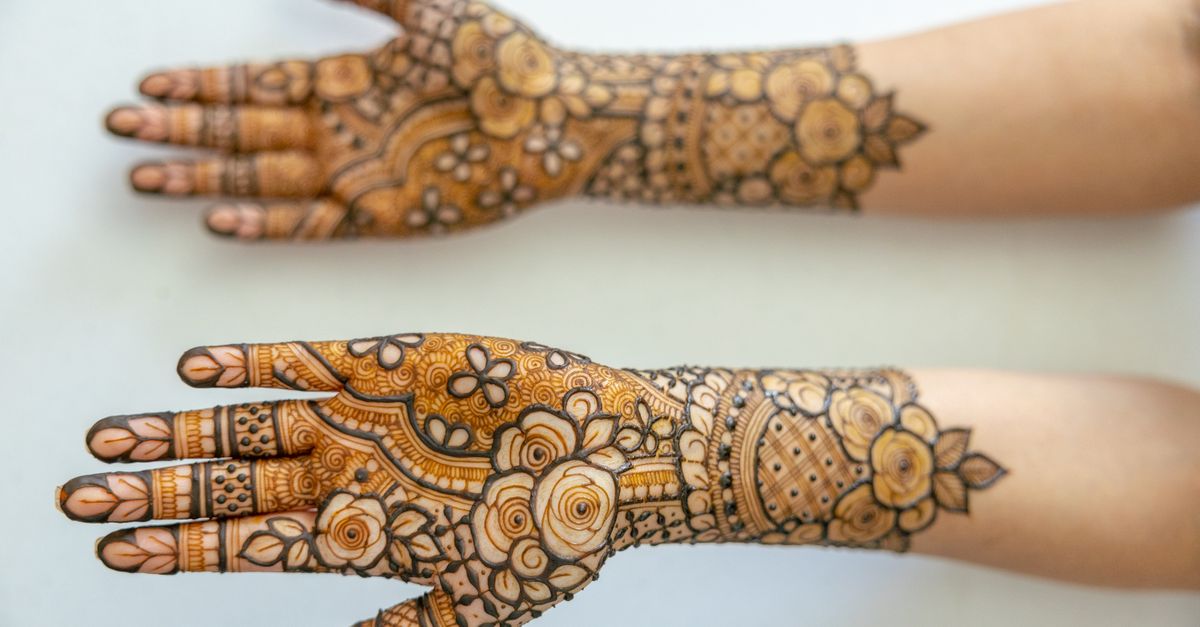
Mehendi (also spelled mehndi) is the South Asian name for the art form and the paste made from henna powder, mixed with water, lemon juice, and essential oils like eucalyptus or clove to intensify the stain. It specifically refers to the tradition of applying intricate designs for weddings and festivals in India, Pakistan, and Bangladesh.
So functionally: henna is the ingredient, mehendi is the craft and the cultural practice built around it. Arabic henna designs (bold, floral, less dense) and Indian mehendi (intricate, full-coverage, motif-heavy) are both made from the same base plant dye, styled differently by tradition.
Why does the colour vary so much? Fresh, well-processed henna paste with good essential oil content stains a deep reddish-brown to near-black, lasting 1-3 weeks. Poor-quality or old henna powder gives a weak, orange stain that fades within days - which is why choosing an experienced artist who sources fresh henna matters as much as the design itself.
One safety note: "black henna," which stains near-instantly and very dark, usually contains para-phenylenediamine (PPD), a chemical dye not derived from the henna plant at all. It can cause serious allergic reactions and isn't traditional mehendi - always ask your artist what's in the paste before application, especially for bridal work where the design needs to last for days.
Mehendi vs Henna: What's Actually the Difference?
MehendiBooking Team
13 September 2026
3 views
Clearing up the confusion between mehendi and henna - the plant, the paste, the tradition, and why the words get used interchangeably.
#mehendi vs henna#mehendi meaning#henna tradition