Back to BlogDesign TrendsBrides often assume engagement and wedding mehendi should match, but most experienced artists recommend deliberately different approaches for the two events.
Engagement mehendi is usually lighter and faster - think delicate florals, a fingertip or wrist-focused design, or a stylish minimalist pattern on one hand. It's meant to look elegant in photos without taking hours to apply, since engagement functions are often shorter and less mehendi-centric than the wedding itself.
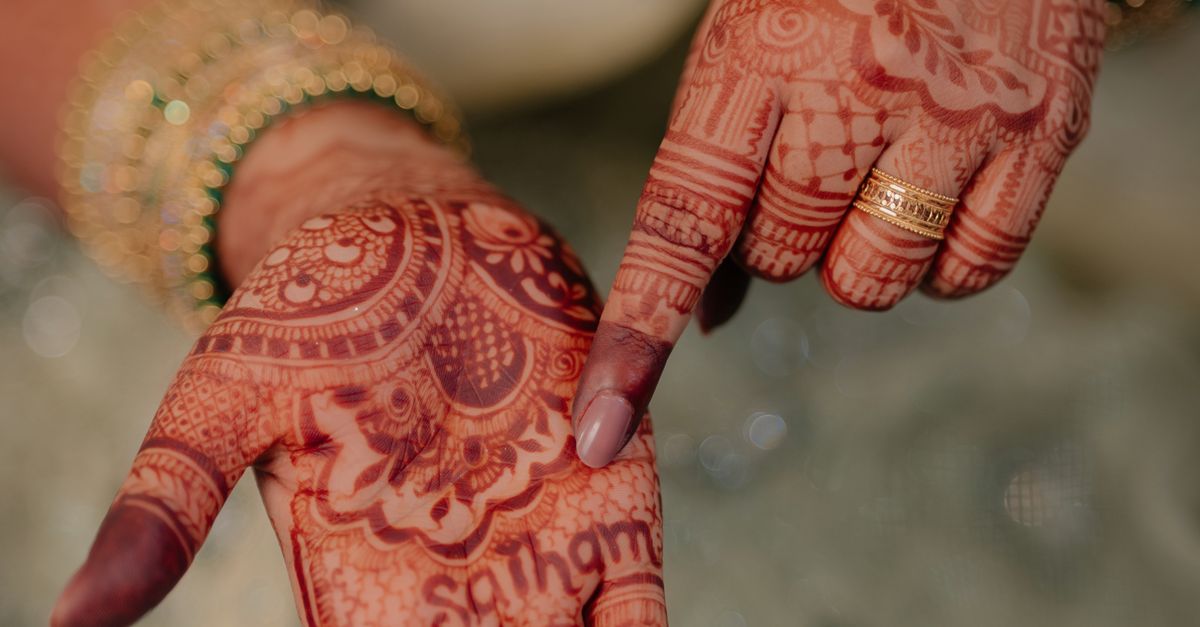
Wedding (or "mehendi ceremony") mehendi is the main event - full coverage on both hands, often extending to the feet, with dense traditional motifs, the groom's name hidden somewhere in the pattern, and enough detail to hold up as the centrepiece of an entire day's celebration. This is where brides invest the most time (4-8 hours is common) and the highest budget.
A practical reason for the difference: wedding mehendi needs to last through multiple functions - haldi, sangeet, the wedding itself, and sometimes the reception - so artists apply thicker paste and recommend longer sit-times for a deeper, longer-lasting stain. Engagement mehendi only needs to look good for one evening, so a lighter application is enough.
Style-wise, many brides use the engagement mehendi to test a design language (Arabic fusion, minimalist bracelets, floral wrist pieces) before committing to a heavier, full version of the same style for the wedding. It's a low-risk way to see what you actually like on your own skin before the big day.
If you're booking both events, tell your artist upfront - a good one will plan the engagement design to complement, not duplicate, whatever you're planning for the wedding itself.
Engagement Mehendi vs Wedding Mehendi: How the Designs Differ
MehendiBooking Team
13 September 2026
4 views
Why your engagement mehendi should look different from your wedding mehendi - coverage, style, and how brides typically plan both.
#engagement mehendi#wedding mehendi#mehendi designs by occasion